Working on a yacht looks effortless from the outside.
Clear water. Polished interiors. Travel that feels almost unreal.
But getting your first job? That’s where most people get stuck.
It’s not complicated — but it is structured. And if you don’t understand the process properly, it’s easy to waste time, money, and energy.
This guide breaks it down clearly — step by step — so you know exactly what to do.
Before You Start
Let’s get one thing straight.
This isn’t a travel job with a uniform.
It’s a professional role in a high-standard environment where:
- you live where you work
- expectations are high
- attitude matters as much as experience
If you approach it seriously, your chances improve immediately.
Step 1: Get the Right Qualifications
Before anything else, you need the basics.
Required:
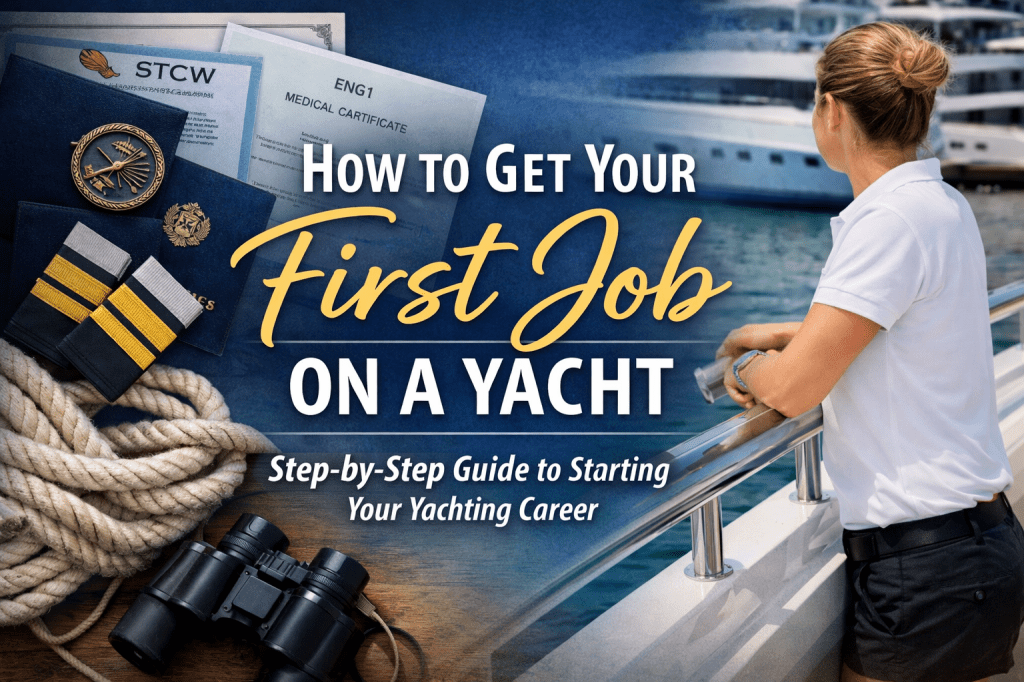
- STCW Basic Safety Training
- ENG1 Medical Certificate
Without these, most yachts won’t consider you.
📌 What is STCW?
A 5-day safety course covering:
- fire fighting
- sea survival
- first aid
- personal safety
It’s the minimum requirement to work at sea.
📌 What is ENG1?
A medical certificate proving you’re fit to work onboard.
Valid for up to 2 years.
👉 Do this first. Everything else comes after.
Step 2: Build a Yacht-Specific CV
Your normal CV won’t work here.
It needs to be:
- clean
- simple
- easy to scan in seconds
Include:
- full name + contact details
- current location
- nationality + visa status
- certifications (STCW, ENG1)
- position you’re applying for
- relevant experience (hospitality, cleaning, service, manual work etc.)
- a professional photo
⚠️ Common mistake
Trying to sound experienced when you’re not.👉 Be clear. Be honest. Show transferable skills.
Step 3: Choose Your Department
Don’t apply for “anything.”
Pick a lane.
Interior (Stew)
- service
- housekeeping
- guest-facing
Best for: hospitality, events, detail-focused people
Deck
- exterior work
- maintenance
- watersports
Best for: hands-on, practical, outdoors
Engine / Chef
More specialised — usually requires experience.
👉 Clarity = better chances of getting hired
Step 4: Go Where the Jobs Are
This is where most people get it wrong.
Applying from home is possible — but harder.
📍 Main yachting hubs:
- Antibes (France)
- Palma (Spain)
- Fort Lauderdale (USA)
Being there means:
- you’re available immediately
- you can dockwalk
- you can get daywork
👉 That gives you a huge advantage.
Step 5: Register With Crew Agencies
Agencies help get your CV in front of the right people.
They can help with:
- CV feedback
- job matching
- interview opportunities
👉 But they won’t carry you.
You still need strong documents, availability, and the right attitude.
Step 6: Be Ready to Daywork
This is how many people get their first job.
📌 What is daywork?
Short-term work onboard:
- cleaning
- polishing
- assisting crew
Why it matters:
- builds experience
- gets you references
- puts you in front of decision-makers
👉 Do it well, and it often turns into a full-time role
Step 7: Learn How to Dockwalk
Dockwalking = approaching yachts directly.
It still works — if done properly.
Basic rules:
- go alone
- dress professionally
- bring printed CVs
- be polite and brief
- go in the morning (not lunch time)
👉 You’re not begging. You’re introducing yourself professionally.
Step 8: Get Your Documents in Order
Beyond STCW and ENG1, have:
- passport
- CV (ready to send instantly)
- certificates
- references
📌 Important: Visas
If you want to work in the U.S.:
- many yachts require a B1/B2 visa
If working in Europe:
- your passport/work rights matter
👉 This can affect whether you’re even considered.
Step 9: Be Ready to Move Fast
Yachting hires quickly. Sometimes within hours.
You need to be:
- contactable
- prepared
- ready to start
👉 The easier you are to hire, the more likely you will be.
Step 10: Treat Your First Job as a Foot in the Door
Your first role might not be perfect. That’s normal.
What it gives you:
- experience
- references
- confidence
- credibility
👉 After that, everything gets easier.
📌 Quick Checklist
- STCW completed
- ENG1 done
- Yacht CV ready
- Role chosen
- Location sorted
- Agencies contacted
- Documents organised
- Ready to daywork
Common Mistakes to Avoid
- ❌ Waiting too long to get qualified
- ❌ Sending a generic CV
- ❌ Applying from far away with no plan
- ❌ Being unclear about your role
- ❌ Ignoring visa requirements
- ❌ Refusing daywork
👉 These slow people down more than anything else.
Final Thought
Getting a job on a yacht isn’t about luck.
It’s about doing the basics properly.
- Get qualified
- Show up prepared
- Stay consistent
Most people don’t fail because they can’t do it.
They fail because they don’t approach it correctly.
Related Posts
👉 Before You Join a Yacht, Read This
👉 A Day In The Life of a Yacht Steward
👉 The Shipyard Survival Guide
🔍 FAQ
Do you need experience to work on a yacht?
Not always. Many people start with no yacht experience, but relevant skills (hospitality, cleaning, service, manual work) help significantly.
—
How long does it take to get a yacht job?
It can take anywhere from a few days to a few months depending on timing, location, and preparation.
—
What is the easiest yacht job to get?
Entry-level steward/ess and deckhand roles are the most common starting points.
—
Do you need to live in a yachting hub?
Not permanently — but being there during your job search increases your chances significantly.
—
Is yachting a good career?
For the right person, yes. It offers travel, savings potential, and career progression — but it is demanding.
👉 If you’re serious about entering yachting, also read:
Before You Join a Yacht, Read This


Leave a Reply